Introductions GOSH Gathering Kathmandu

Hi everyone! I’m Urs from GaudiLabs in Switzerland. I’ve been part of the GOSH community for a while — I was on the organizing team for the very first GOSH gathering in Geneva and later joined the gathering in Shenzhen. I’m really looking forward to meeting everyone and being part of the Kathmandu gathering.

Now I’m wondering who is coming, what I should bring, and what your interests are. So I thought I’d start an introduction round here and give you a little idea of what I do as a starter.

GaudiLabs is an independent laboratory and open-source hardware company based in Switzerland – more on this here. Since the beginning of last year, I have been working with my partner Miranda. Besides our open hardware business, we are reimagining society’s relationship with science and technology, and doing research in low-energy devices, electroactive materials, bioelectronics, and organic biotransistors, with a non-capatriarcolonialist approach.

For years, I have also been passionate about low-light research, playing with Silicon Photomultipliers (SiPMs) and trying to measure single photons. On that journey, I recently teamed up with Martin from the Open Science Foundation and Benedict from openUC2 to work on imaging biophotons.

And then I’m also involved in supporting the open-source Linux and Solar Training Center in Cameroon.

So here are some things I could bring and share:

  • Disassemble a qPocketPCR and share how GaudiLabs makes open science hardware
  • Test a luminometer prototype for measuring bacterial contamination in water
  • Show how to make simple organic transistors
  • Low-energy synthesizer soldered by the sun
  • Other ideas that are particularly relevant to the local context.

I will also arrive on 1 October and would be happy to be part of the pre-phase and get involved with Karkhana. Sunoj and Sabhyata once visited us here in Lucerne, so I’m wondering who would be a good person to connect with now to get involved.

Looking forward to hearing from you who are joining.

9 Likes

what are your travel plans, Urs?

just looking into 2-10oct??

Hi @Rachel nice to hear from you. I will arrive 1. October for the Pre-Gosh and not stay for post tourism. It is quiet here, heard only 20 or so international GOSHers joining, guess @dusjagr is coming, and maybe @briannaljohns and @shannond , @gbathree don’t know - and mostly local participants, but maybe not on this forum, @sachet @aakriti what communication channels is Karkhana using? Would be nice to merge.

2 Likes

Hi all

Planning to join you all at the gathering…

5 Likes

I don’t think I can make it this year - too far away and there’s some other gatherings that I need to attend in a similar timeframe. Sounds amazing though and excited to get the notes!

1 Like

too bad… hope all goes well (also for you!) !!

=)

Guess I should add, for this topic, just in case, I think I will mainly be discussing Hackuarium’s latest water quality work, which also leaned upon the DIT incubators designed by Harald T in 2022 (now with a new 3D-printed twist). See also here- DIT incubator for Bacté-Rivières

My open science adventures began in Switzerland more than 10 years ago, and I am so happy to be part of this community (though as a biologist I am more of a user than a maker, at least to date…)!

One of the recent fun projects Hackuarium has pursued is Mudtronics (microbial fuel cells to ‘make electricity’ from ‘swamp bugs’), but my big pushes are usually around public health and avoidable risks… We also could do micronuclei tests, perhaps too, if there is interest, and room in the program.

If peeps want to try to do water quality things, as done in Panama, then we should get R-Cards delivered directly to Kathmandu, if there is some budget for that… (sadly not from Hackuarium, but we used a lot this season and I will present results, if all goes well with my bookings for this trip!) Also, if there is a pressure cooker or other microbio tools we can use there, we could do other things around microbes and water quality. (@gaudi I could bring the 16S primers in a pcr master mix for bacterial species IDs using your pocket pcr rig, if we could manage to grow colonies on plates…)

Here is what I put in my usual ‘signature’ in case you would like to explore (while looking forward to learning more from all the participants!) :

--

Rachel Aronoff, PhD
Directrice Scientifique
AGiR! Action pour l’intégrité Génomique via la Recherche!
www.genomicintegrity.org
@genomicintegrity @agirgenomes.bsky.social

Responsable de laboratoire
Association Hackuarium

Route de Crochy 20, 1024 Ecublens CH
wiki.hackuarium.ch www.hackuarium.ch
#DIYbio #citizenscience #DoItTogether
@hackuarium

&

Fondatrice

Resisters for Democracy - Europe

3 Likes

so cool - it looks like we must be near the Bagmati river for this meeting.

it is, to me, the ‘classic’ water sampling example up a big river! https://bagmatiriverartproject.com/

hoping we can get some R-cards to try, do the incubation in the little incubator (we can make more?) and potentially compare to what was seen more than 10 years ago…

who else is interested in water monitoring? besides microbes, there is much that can be done.

cu soon!

Rachel

4 Likes

Hello everyone,

This is Sachet Manandhar from Karkhana Samuha and we’re very excited to welcome you all of Nepal for GOSH 2026. Our team is in the final push for the planning and programming design for the upcoming event.

Please feel free to reach out if there’s any support from the local team that you need with the travel and program participation.

1 Like

Hi everyone!

I’m Irisa Shrestha, an Event Coordinator at Karkhana, and I’m helping organize the GOSH event. I’m super excited to be part of it and really looking forward to meeting and connecting with you all!

We’re communicating with participants in the whatsapp group for initial communications, will onboard all of them here soon

Dear @gbathree, thank you for your reply. I understand — the long journey and the flight were also my biggest concerns. We’ll keep you updated.

But who will moderate the unconferencing this time? :sweat_smile:

Hi all, I am Rupesh. I am a writer and teacher from Nepal. My day job is running a makerspace and leading innovation in a private school in Kathmandu. Naturally, I am interested in making things, mashing up cross-disciplinary ideas, and having fun along the way.
I love writing stories for kids, and enjoy hiking, trekking, running, around Kathmandu. In some way or the other, I keep finding OSH relevant in all of my endeavors.
See you all at the gathering!

1 Like

Dear @sachet, dear @irisa

Thank you for your reply, for hosting us, and for all your great work helping to organize the gathering. I have heard so much about Karkhana from Sunoj and Sabhyata who visited us in Switzerland and from @dusjagr, with whom I have worked for many years. It is an honour for me to come and visit, meet you, and get to know Karkhana better.

I booked my trip so that I can arrive a few days earlier to help with the preparations and to share experiences with people from Karkhana and local participants.

And thank you for working on the participant communication. We can also use a WhatsApp group for communication if that is easier for you, especially during the gathering.

Urs

1 Like

:slight_smile: You’ll have to see if Max will come back! Also Urs - just super impressed with everything you’ve been doing - it’s really genuinely awesome.
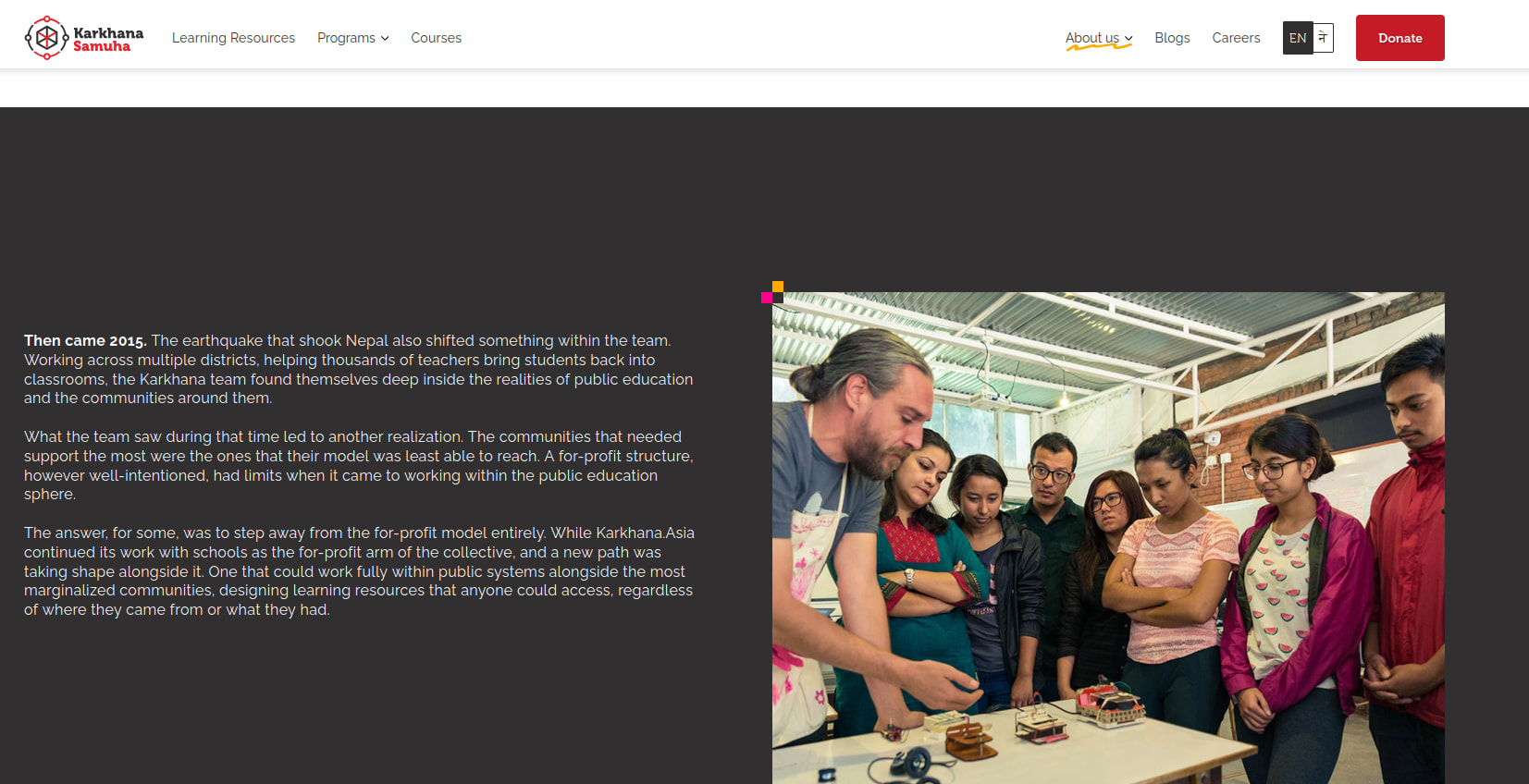
So much looking forward to return to Kathmandu and collaborate with the amazing people from Karkhana again, where i was once joining a 10 Days “boot-camp” to develop educational activities around Space and DIY electronics. And I am now in the GOSH workgroup to make this gathering happening with all of you and the international team.

My name is Marc Dusseiller, also known as @dusjagr on all online channels. Together with many friends in the Global Hackteria Network, we have explored transdisciplinary collaborations and Do-It-With-Others practices at the interface of biological science, maker culture and art, with an open source culture approach. Starting at the very beginning with workshops on DIY (do it yourself) microscopy, turning a cheap webcam into a useable microscope for bioVJing at parties, or education at schools.

Throughout the years we have organized hands-on collaborative gatherings and workshops such as HackteriaLab in Switzerland, Bangalore, India, or Yogyakarta, Indonesia, where we initiated our first collaborations with people pre-Karkhana from Nepal. Sharing and developing approaches to Open Source Biological Art, DIY biologoy and Generic Lab Equipment.

From this smaller activities we connected since 2015/16 to other enthusiasts of open hardware for citizen cience and low-cost lab stuffs, and were part of the founding team for GOSH 2016 to be held in Geneva Switzerland, and been active as a community GOSH ambassador and collaborator for other editions of our beautiful Gathering.

Currently i am also very active in a large collaborative hackerspace in Zurich, Switzerland, together with the local DIY electronics community (SGMK) and others, where we also host regular workshops and a “hacker-in-residence” programme.

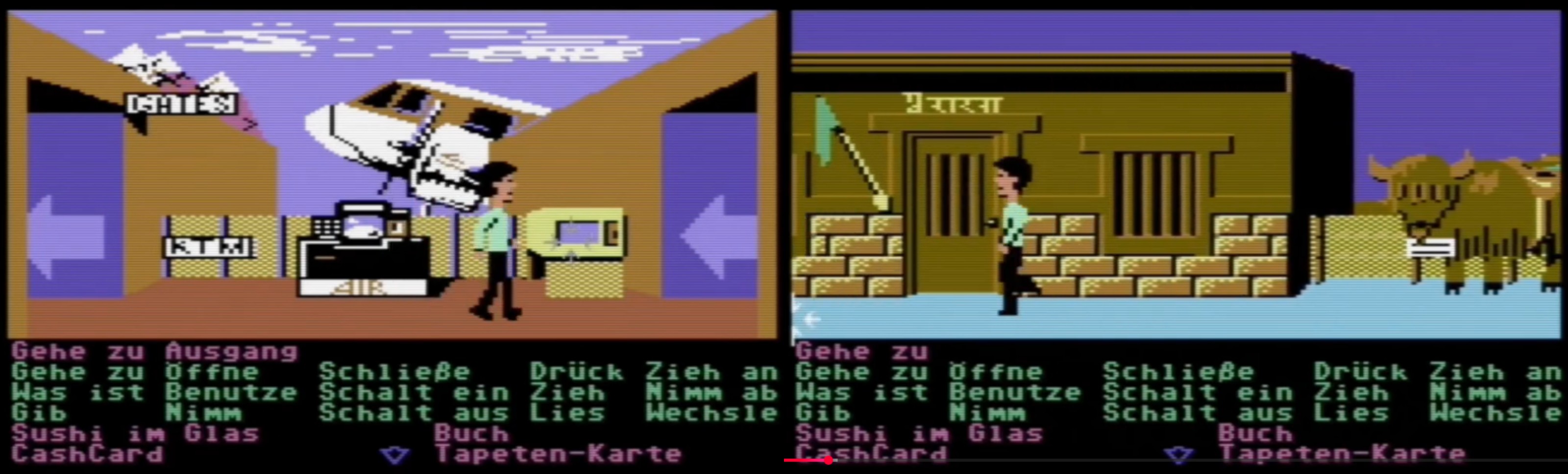
So I am kinda coming the third time to Nepal… though my first time was just in my mind and imagination, playing the classic Commodore 64 game, Zack McKracken, back in the late 80ies…

1 Like

Hi everyone! :waving_hand:

I’m Pawan Panthi from Nepal, a BE IT Engineer from NCIT, Pokhara University, with a strong interest in open technology, cybersecurity, digital innovation, and community-driven solutions.

I’m currently involved with the Cyber Security Research and Innovation (CSRI) community in Nepal, where I’ve been working around cybersecurity research and technology. I also enjoy building practical software projects and exploring how technology can address real-world challenges.

I’m excited to be part of GOSH 2026 and to learn more about open science hardware, open-source collaboration, and the people and projects contributing to this global community. Coming from Nepal, I’m particularly interested in how open hardware can make scientific tools and learning resources more accessible in communities with limited resources.

Looking forward to meeting everyone in Kathmandu, learning from your experiences, and hopefully contributing something of my own! :globe_showing_asia_australia::wrench:

Nice to meet you all!

1 Like

is this still a thing on Saturdays??

from wikipedia-

The Bagmati River contains large amounts of untreated sewage, and large levels of pollution of the river exist due primarily to the region’s large population. Many residents in Kathmandu empty their personal garbage and waste into the river.[10] In particular the Hanumante Khola, Dhobī Kholā, Tukucha Khola and Bishnumati are the most polluted.[9] Attempts are being made to monitor the Bagmati River system and restore its cleanliness. These include “pollution loads modification, flow augmentation and placement of weirs at critical locations”.[11]

On 18 May 2013, under the initiative of then chief secretary Leela Mani Poudyal, the Bagmati Mega Clean-Up Campaign was started.[12] Every Saturday, personnels of the Nepal Army and Nepal Police, along with the general public, gather to clean the waste and sewage from the river.

Not really, there might be some local community driven works periodically, but a sustained regular engagement does not exist.

1 Like

maybe after the big disaster in the north things like some E. coli aren’t major worries…

how is tap water in Kathmandu? do you only use bottled water?

Is it worth trying to see the Pashupatinath Temple ?

Looks like it is close to the airport? (could even be a stop on the way in?? I arrive on the 2nd…)
Or what would you recommend most on/around the river?

Is it true you can’t walk easily past the ring road to the river (have to go up a ways to find a passage?)?