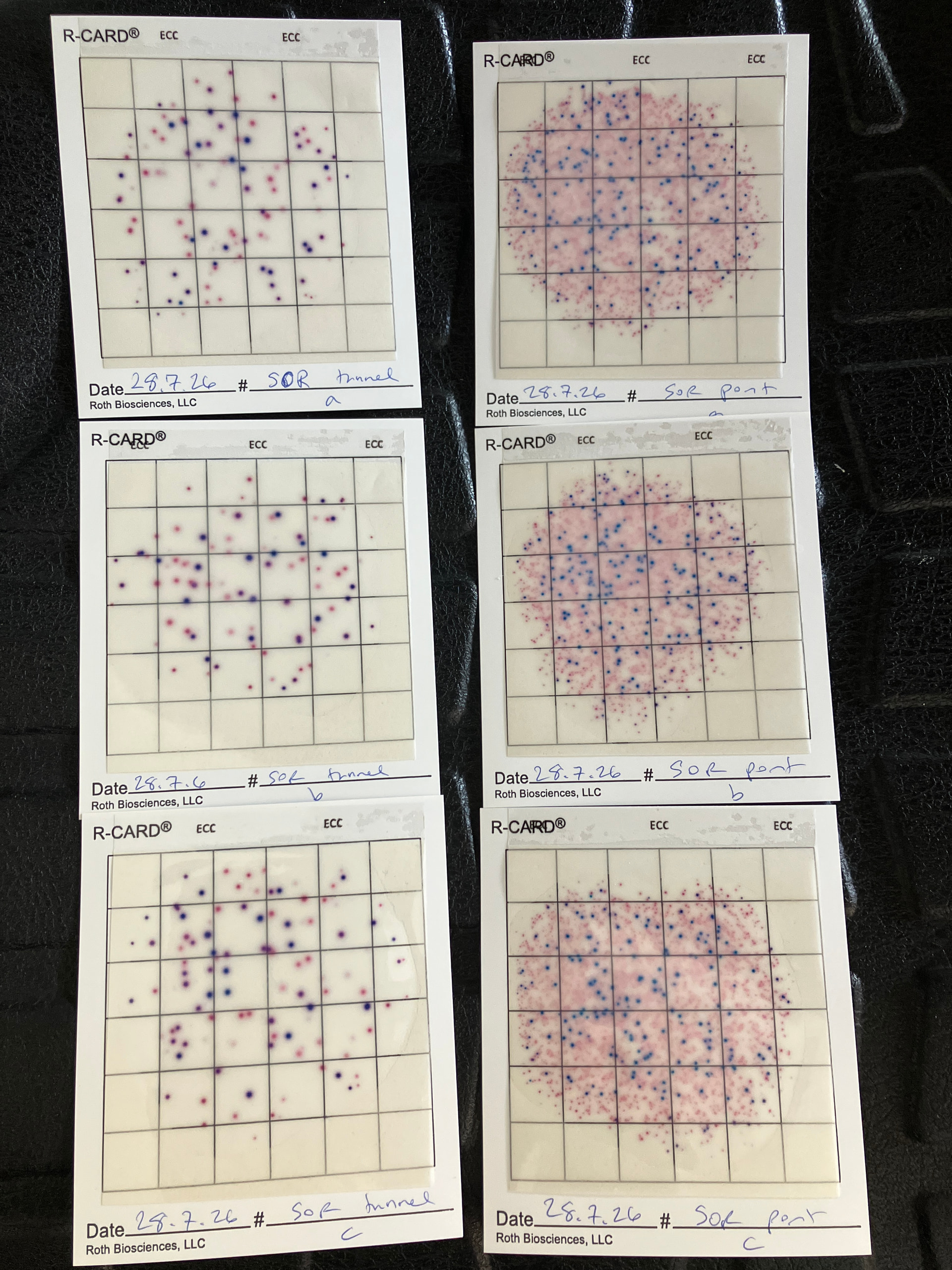
just one more post here, to say how glad our ‘Bacté-Rivières’ team is for the incubators - not having to come to lab 3 times, inoculation, 24h and 48h images… Campers used them, too, and even I used one of the 3D printed ones over the last weekend, so I wouldn’t have to abandon my family after doing Drone sampling last Friday! =)
Will try to add a few more pics, esp as we repeated the experiment, and within less than 200m, passing the school, the river became incredibly dirty (just about to check the local pipes on the map! ) at least by swiss standards!
Thanks again to Harald (wondered what is your user name here, and just saw! =) )
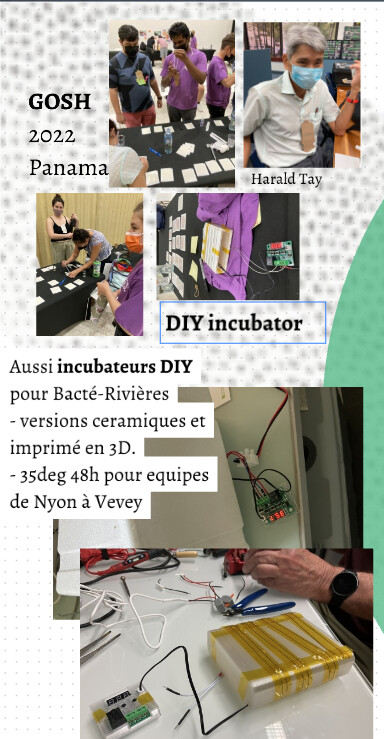
Harold Tay made a super simple incubator the first day of the gathering that could stably hold the 35 degree Celsius temperature needed *** for the R-Cards out of some old bathroom tiles, nylon-coated steel wire, and a simple thermostat, the W1209.
A masonry bit was used to score the glazed portion of the tile, breaking it into 3. This allowed a whole stack of R-cards to be put inside for the 48h incubation.
Epoxy glue was used to glue these the tile pieces together.
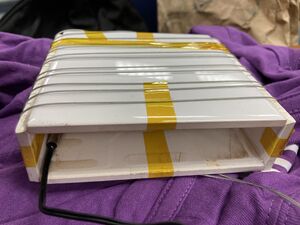
ready to try!
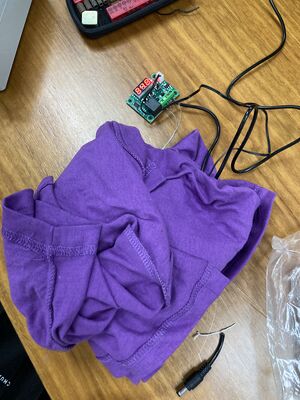
a t-shirt was used as insulation…
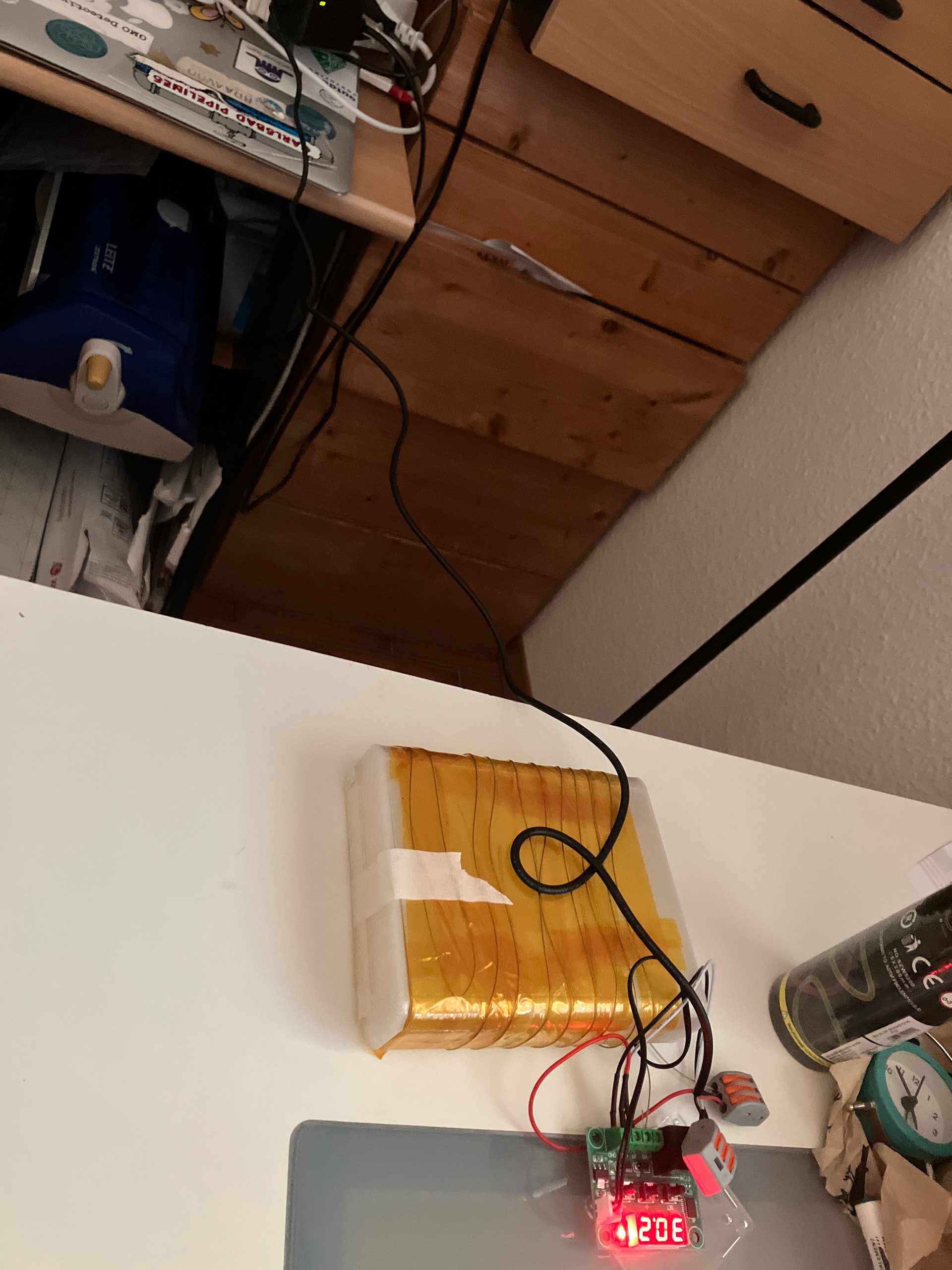
Wire was wrapped in both directions, to avoid a magnetic field effect…
On the last day of #GOSH*, Harold crimped bits onto the wires, to make it more stable for its travel back to Switzerland…* (This text in italics was fromthe old wiki pagearound the project to describe the incubator from after Panama. I will get the stl files from our Yngvar for the 3D printed casing and cover, too, available for anyone interested…)
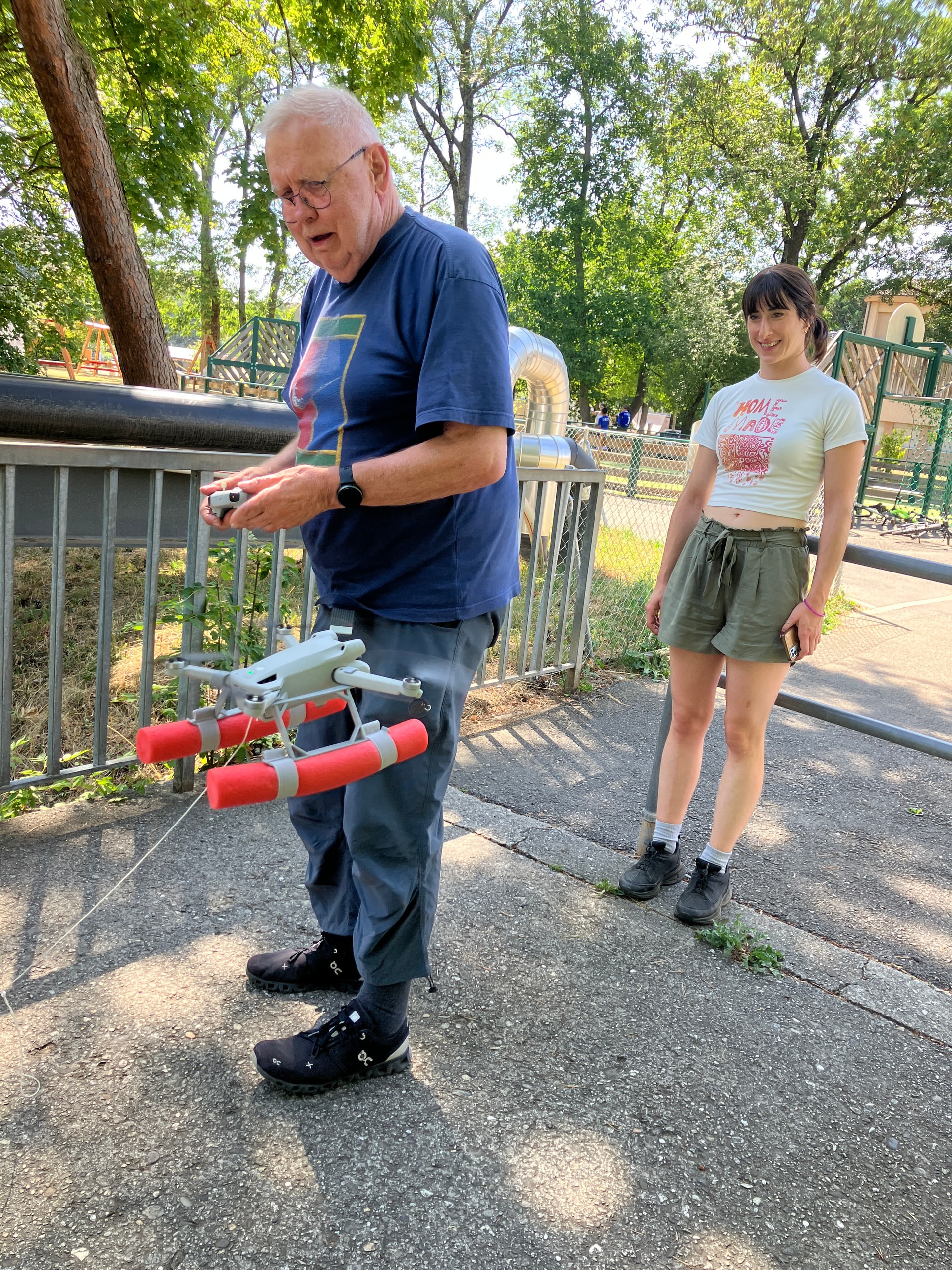
Here is one image from our Drone Day on Friday (on Monday I repeated the expt by hand, and used string to get the sample from the bridge. actually was much quicker like that! =)
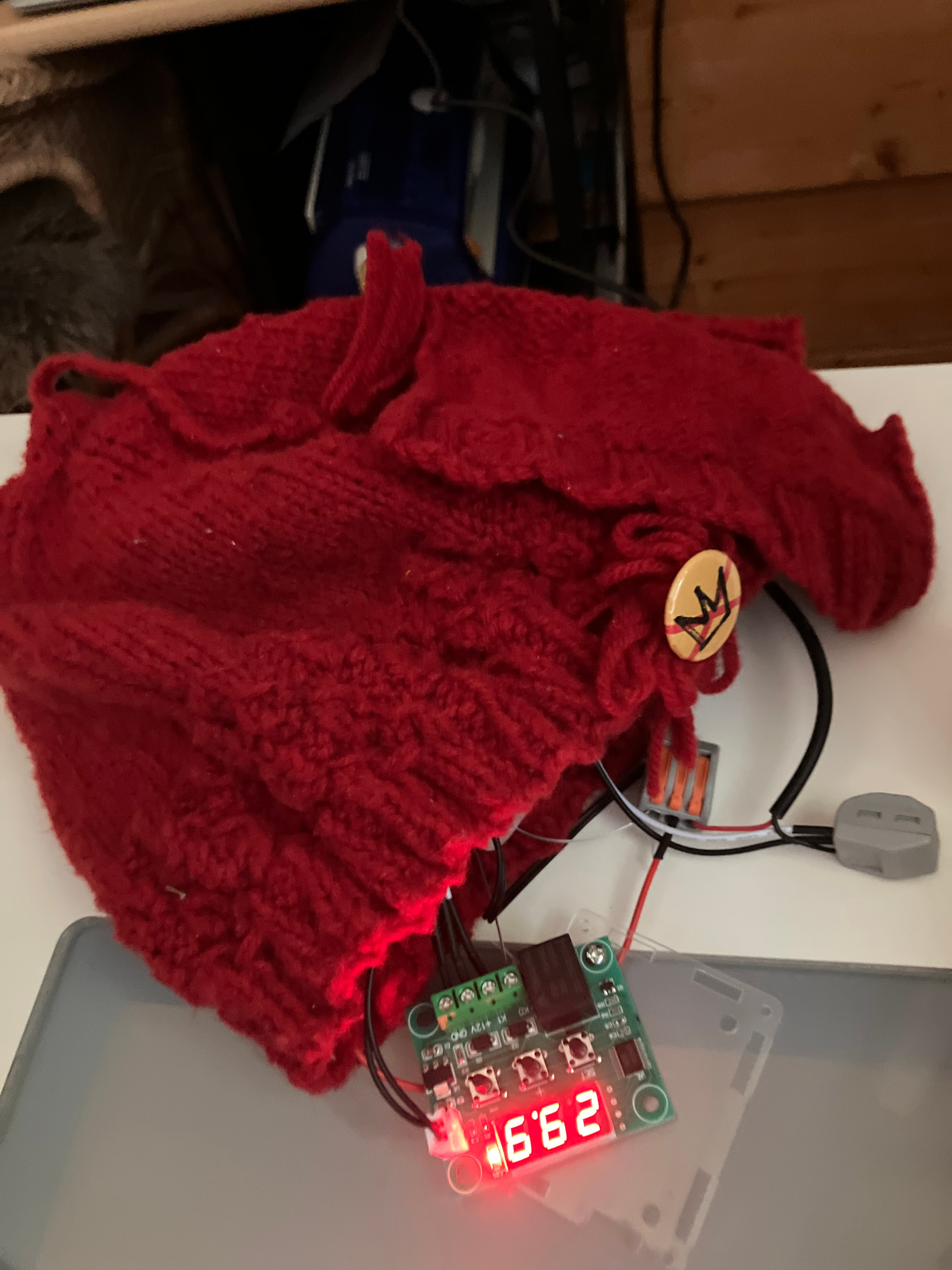
and two from the incubator at home (it snuggled nicely in my ‘resister’ hat)
Finally the result on the R cards… (same with drone or by hand - more dirty after going less than 200m downstream)
Greetings to all (esp those who might have used these type of cards in Panama) !
=)