Workshops at GOSH - in preparation already!

We are happy to have already received various proposals for Workshops to be held throughout our coming Gathering!

As some of them needs a bit more prior planning we start this discussion here on the forum already, while other Unconferencing acitivities will colaboratively developed and “decided by your feet”. See this post.

We are also very welcoming more participant to offer hands-on-workshops! Bring what you need, tell us what we could prepare.

Please add to this topics threat more info about your planned workshop activity below as reply.
And correct me or extend my mini-briefs described here:

@Ebuka suggested a beginner friendly “Smart Dustbin: A Simple Open Hardware Project for Everyday Use”

@ajinkya offers to introduce a “FreeCAD user/addon development” workshop

@saadcaffeine will show simple smartphone lens hacks for micro/macro photography

@saadcaffeine also offers other hands-on activities on “Opensource Smart Citizen network” enabling the new PlanetAI platform

@sgnbraillerap will have an extensive Do-It-Together build session throughout the 3 days on the BrailleRAP, aswell as shorter hands-on introduction.

@Rachel offers various hands-on activites on detecting bacteria and/or DNA damage detection

@mariafrangos will introduce methods for “Designing for open science contexts”

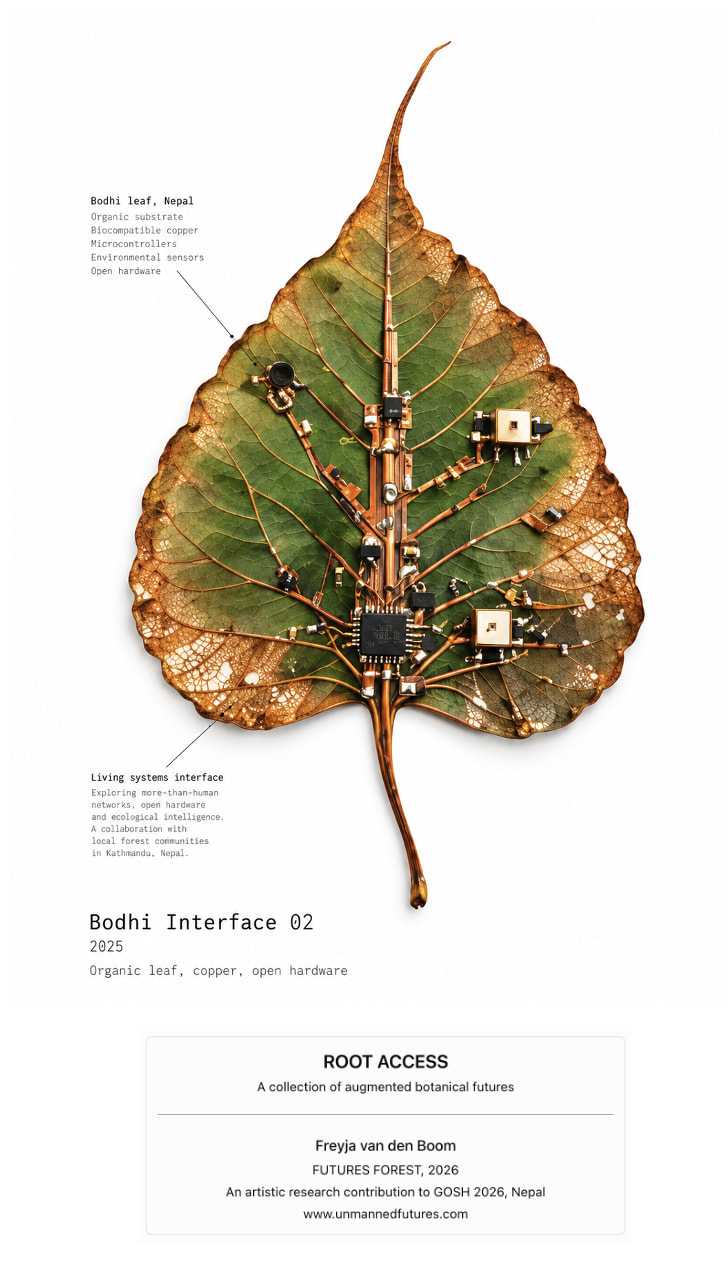
@Freyja takes us into a specilative futures through “A Worldbuilding and Co-Dreaming Session for Open Science Hardware Futures” workshop, and more other things to be surprised with

@Mixki1 and Anna have several activity as short workshops and also througout GOSH with a low-tech installation "Make Space for Mistakes”

Mohammed Shan will show how to design a PCB

@giuliannazam offers a workshop on sound narratives for social change

@Ajmal will introduce us to “The AI Co-Pilot: Practical Prompting for Everyday Productivity”

@Duran offers 2 workshops from hat-making to vibe coding, be surprised, come curious, leave confused

@Rabin hands-on explorations of “locally manufactured tech system for fish farming and water quality”

our hosts from Karkhana will also bring in hands-on activities!

@gaudi of course will break apart and open up the gaudilabs open science hardware with you

@dusjagr myself, hopefully will manage to “etch your own PCB” chemicals are in my luggage!

and you?

4 Likes

Hi. Unfortunately I don’t have sufficient knowledge to create a complete FreeCAD addon, despite being optimistic at application phase back in March/April. This is still an important use case for someone with a good knowledge of programming who would like to create to make specialized workbenches while using the structure that FreeCAD can provide.

What I can do at this point is create a short presentation that motivates towards the creation of these workbenches, including intermediate steps like macros which might suffice for some use cases.

I’m also game if someone wants to create a workbench in a “hackathon” style.

1 Like

it’s really water quality by microbio & the little incubator + mycelia (one biolum for Urs’ photon counter & the other for control & bees) - but depend see whatsapp q? vis molbio things & microscope. Plan’s that it Will be more like 2022 & with sampling of Bagmati river. unless positive responses about the other things.
I want to learn from others & make new things especially.
:wink:

3 Likes

Yes, of course there will be changes in the details of our workshop!
please add it below to this thread, what you “really” plan to offer.

Also mention other details, like how many participants you can host, optimal duration, special infra needs.

Most of the Workshops will be pre-scheduled, to go alongside the other unconferencing sessions.

2 Likes

Hi Marc, thanks for listing my sessions! I’d like to update the full details for my two workshops.

WORKSHOP 1

Official name: 1 to 100 in 1 hour workshop

This hands-on paper activity simulates how an initial idea evolves toward mass production. No prior experience required.

  • Duration: 60 minutes
  • Max participants: 30
  • Requirements: Indoor space would be nice (to avoid rain risk). Need projector for PPT. Around 5 tables with matching stools/chairs, each table seats 5 ~ 6 people. Table supplies per table: Assorted colour A4 paper (80~100 sheets), 1 craft knife, 1 roll double-sided tape, 1 pair craft scissors, 2~3 permanent markers, 1 stapler with staples.

WORKSHOP 2

Official name: Vibe Coding workshop

Participants will do hands-on practice with open-source Wio-Terminal hardware I bring from China.

Note for registration: Participants are strongly recommended to bring their own laptops, otherwise hands-on practice will not be possible.

Additional note: I have brought 17 units of Wio Terminal for this workshop, which will be donated to GOSH after the event. The maximum participant count of 17 is based on this hardware quantity. If you already own a Wio Terminal, you are welcome to join as well. Experienced Wio Terminal users are also invited to come and help as teaching assistants.

  • Duration: 90 minutes
  • Max participants: 17 (limited by hardware quantity I brought)
  • Requirements: Indoor space only, rain risk makes outdoor unsuitable. Around 4 tables for 4–5 participants each, enough room for laptops. Projector for PPT. Power strips for each table are optional, helpful for laptop charging.

Looking forward to meeting all of you!

2 Likes

Sounds good, also i can contribute an introduction to RTOS

Hello everyone

So due to some travel troubles we need to be a bit creative. I will share a link for you to contribute with ideas already. for now I going to try and inspire you ! The plan is to find a spot for us on Tuesday and a post-GOSH-conference next week for those who are still around and want to work on the open science fiction futures !!! the workshop GOSH 2036: The Day After

What if we actually succeeded?

An unconference workshop on open hardware, alternative futures and the worlds we want to create.

Imagine it is 2036. We are BACK in Kathmandu for the GOSH reunion.

Ten years ago, we imagined a world where open science hardware would become ubiquitous. Where anyone, anywhere, could access, build, modify, repair and share the tools they need.

What happened? Did we succeed?

Perhaps open science became the norm. Scientific instruments are locally produced, communities share their resources, and technological knowledge has become a commons. What happened to intellectual property, the technology industry and scientific institutions?

Or perhaps we failed spectacularly. AI companies control scientific research, instruments have become proprietary black boxes, and even the right to repair has disappeared. Who gets to conduct science, and who decides what counts as knowledge?

But what if we succeeded and created entirely new problems? What happens when everybody can build anything? Who maintains our shared technological infrastructure? Who bears the environmental costs? Does openness necessarily produce equality?

The workshop

Let’s travel to 2036 and find out.

In this participatory futures workshop, we will create alternative worlds in which the ambitions of GOSH have succeeded, failed or produced surprising and unintended consequences.

Working in small groups, we will imagine everyday life in these futures. What technologies exist? Who owns them? What became possible, what disappeared, and what would we never have anticipated? Each group will create a small speculative zine documenting its world, featuring news from 2036, fictional technologies, provocative advertisements and messages to our past selves. We will then reconvene at our fictional GOSH reunion to share our stories, challenge each other’s assumptions and work backwards.

What would we need to do today to make our desirable futures possible? And what should we stop doing before it is too late?

No futures experience or artistic skills are required. Bring your imagination, your frustrations and your most ambitious ideas.

Duration: Approximately 60 minutes Format: Participatory futures workshop, collective zine-making Outcome: A collection of alternative GOSH futures, shared feelings and possible actions for today Facilitator: Freyja van den Boom, socio-legal AND artistic research project exploring alternative technological futures. www.unmannedfutures.com

Hi everyone,

I’m facilitating a workshop titled “Novel Engineering with Smart Motors” tomorrow October 5.
Time: 2 to 3:30 pm
Location: Main hall

Here’s a brief description of the workshop

Participants will participate in a Novel Engineering (NE) activity by reading a story, identifying problems that the characters in the story face, and coming up with solutions to those problems.

Novel Engineering is an integrated approach that uses classroom literature as a starting point for open-ended engineering design challenges, which can serve as a bridge toward more inclusive and meaningful engagement in engineering. The advantages of such an approach are that learners identify problems on their own, the context of the book offers a way to simulate clients and constraints that real-world engineers wrestle with as they define problems and identify design constraints, learners empathize with characters as clients. At the same time, as students work on text-based engineering projects, they also engage in productive literacy practices, including noting key details in the text, making inferences, and writing lists and other notes that support their design process, resulting in bidirectional benefits.

To build the solutions we will use craft materials (papers, scissors, skewers, rubber bands) along with Smart Motors which are a low-cost trainable robotics tool developed by Milan Dahal (former Karkhana teacher) at Tufts University, as a part of his PhD. Please visit smartmotors.ai if you want to lean more about his work.